Morality in an Age of Pluralism, Postmodernism, and Polarization
How can bioethics develop moral guidance for the practice of medicine while responding to the dual threats of postmodern moral skepticism and growing moral polarization?
Since its inception, bioethics has struggled to understand its own identity. Is secular bioethics a morally contentless enterprise that helps others navigate moral disagreement, or is it a morally content-full enterprise capable of providing justified moral guidance for the practice of medicine?
During the COVID-19 pandemic, bioethicists from diverse professional, religious, and philosophical backgrounds rapidly developed moral guidance concerning the just allocation of scarce medical resources. Their shared moral language, capacity for moral deliberation, and willingness to revise their judgments reveal something important about what bioethics has become over the past five decades.
We argue that secular bioethics is an emerging moral tradition capable of providing justified, morally content-full guidance for the practice of medicine. Its task is not simply to map the moral terrain or mediate disagreements, but also to help clinicians determine what is morally good, right, and virtuous.
Grounded in the common morality and developed through public reason, the tradition draws on a mid-level philosophical framework without committing itself to any comprehensive religious or philosophical worldview. It is secular in the sense of being non-religious, not anti-religious, and remains open to insights from diverse traditions.
02 / The dual threats
Navigating between two extremes
Both postmodernism and polarization threaten genuine moral deliberation in a pluralistic society, but for opposing reasons.
Radical moral skepticism
Postmodernism
Reason can do too little.
Postmodern moral skepticism denies that substantive moral claims can be rationally justified across worldviews. Bioethics is consequently restricted to mapping the moral terrain and mediating disagreements.
Taken to its logical conclusion, this view produces a radically disintegrated moral landscape in medicine.
Radical moral confidence
Polarization
Reason can do too much.
Polarization dismisses opposing moral perspectives as having little or nothing to contribute to contested moral questions. Bioethics risks becoming a form of activism rather than a community of moral inquiry.
Taken to its logical conclusion, this view seeks a radically integrated moral landscape in medicine.
PostmodernismRadical disintegration
TraditionModest discursive reason
PolarizationRadical integration
The tradition-based alternative
We defend a modest view of discursive reason: reason can justify a substantial body of shared moral guidance while moral deliberation continues on deeply contested questions.
The bioethics tradition can thereby preserve significant moral consistency in the practice of medicine while accommodating ongoing disagreement about the ethics of abortion, physician-assisted suicide, sterilization, contraception, gender-affirming care, and human enhancement, among other issues.
Reasonable positions on both sides of these contentious issues should be understood as competing views within the tradition, rather than as rival moral traditions. Such disagreement is an important feature of any healthy intellectual tradition. Those who hold these positions should be respected as fellow participants in a shared project of moral inquiry while deliberation continues.
A modest view of discursive reason makes substantive moral guidance possible while preserving space for reasonable disagreement.
03 / Philosophical foundations
Shared commitments, without a shared worldview
Modest moral objectivism
We affirm moral truth without requiring agreement about its ultimate nature or source. This leaves room for participants with different metaethical commitments.
Public reason
Deliberation appeals to reasons accessible across reasonable worldviews, drawing on shared standards such as logical inference, empirical evidence, and the common morality.
Moral pluralism
Multiple moral considerations can have genuine force. Their conflicts require deliberation rather than automatic reduction to a single overriding principle.
The common morality
The common morality is an objective normative standard, not an empirical description of shared moral beliefs. Its indeterminate norms require specification and balancing through tradition-constituted moral deliberation.
04 / Moral bricolage
Building a particular morality
Drawing on the common morality, the bioethics tradition develops a particular morality for the practice of medicine. This particular morality is informed by a mid-level philosophical theory comprising moral, metaphysical, and epistemological commitments.
Moral bricolage is one way the tradition develops this theory. Rather than adopting any comprehensive philosophical or religious doctrine in its entirety, the tradition can draw upon components of diverse doctrines, incorporating their insights into a shared philosophical framework through public reason and moral deliberation.
Moral progress can involve bringing judgments into alignment with the common morality, improving coherence within our particular morality, or extending that morality to address new questions with greater precision.
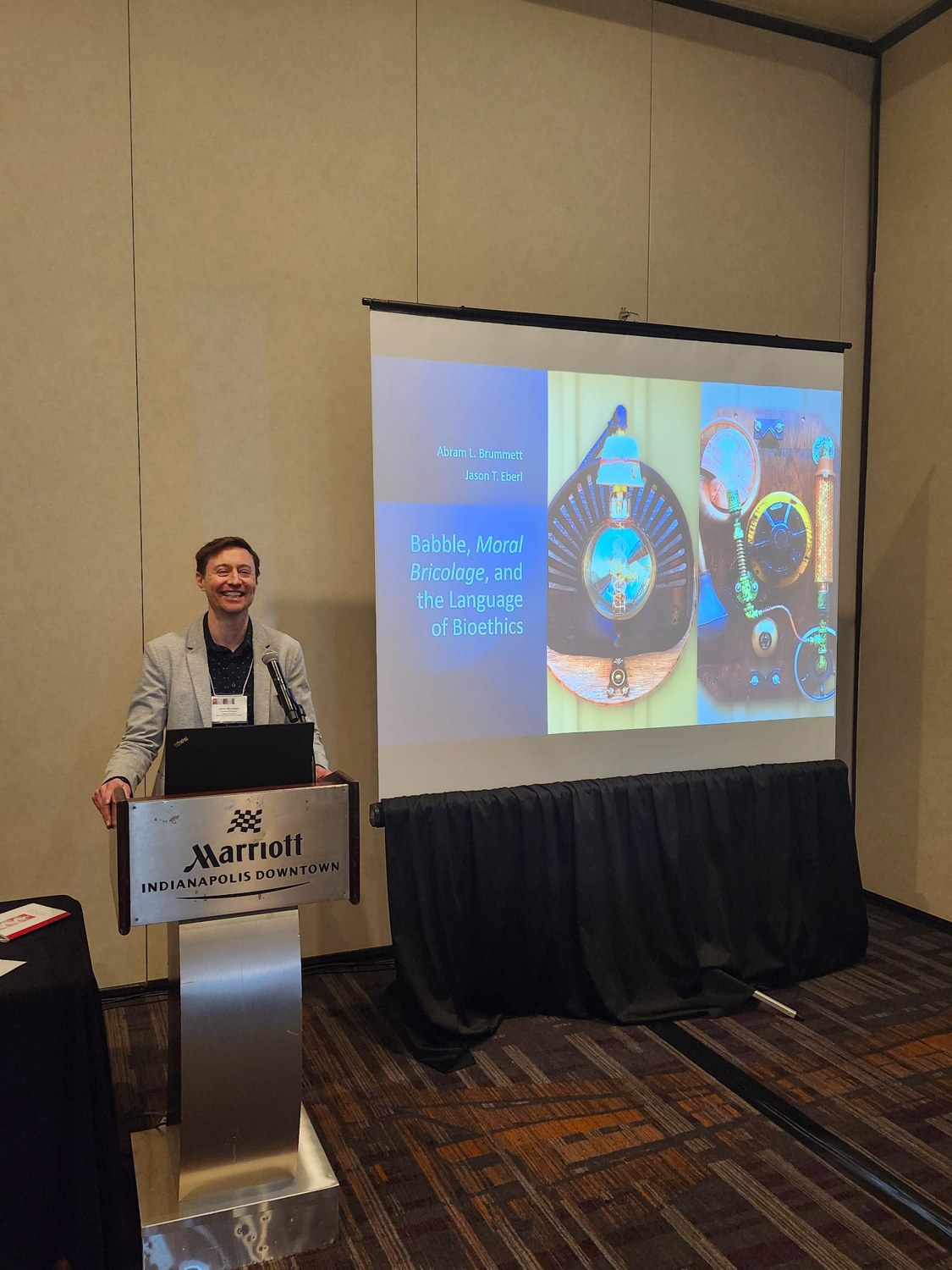
Babble, Moral Bricolage, and the Language of Bioethics
05 / An ongoing conversation
Objections & responses
Is this merely consensus?
No. Agreement is not itself sufficient justification. The tradition aims for agreement shaped by reasons, evidence, and critical scrutiny, and remains open to revision.
Can bioethics overcome postmodern moral skepticism?
Radical moral skepticism denies that reason can justify substantive moral claims across worldviews, limiting bioethics to mapping and mediating disagreement. We reject this restriction: common morality, public reason, and moral deliberation provide resources for justified moral guidance without requiring agreement on ultimate philosophical foundations.
How can bioethics resist moral polarization?
Radical moral confidence dismisses opposing perspectives and threatens to reduce bioethics to activism. The tradition can prevent, dissolve, or resolve potentially polarizing debates through shared moral commitments, conceptual clarification, and deliberation. Where reasonable disagreement persists, a reasonability view of conscientious objection can preserve space for differing practices while deliberation continues.
What does it mean for a philosophical theory to be mid-level?
A mid-level philosophical theory contains enough philosophical content to justify moral guidance without providing a comprehensive account of morality, reality, or knowledge. Its epistemology articulates standards and methods of rational justification; its metaphysics affirms ontological realism and develops commitments concerning concepts such as personhood, bodily integrity, and harm; and its moral theory partially organizes the goods, principles, and virtues that guide medicine. It leaves ultimate philosophical questions open, including the ultimate nature and source of morality and the ultimate nature and structure of reality. Participants can therefore share substantive philosophical commitments without sharing a comprehensive worldview.
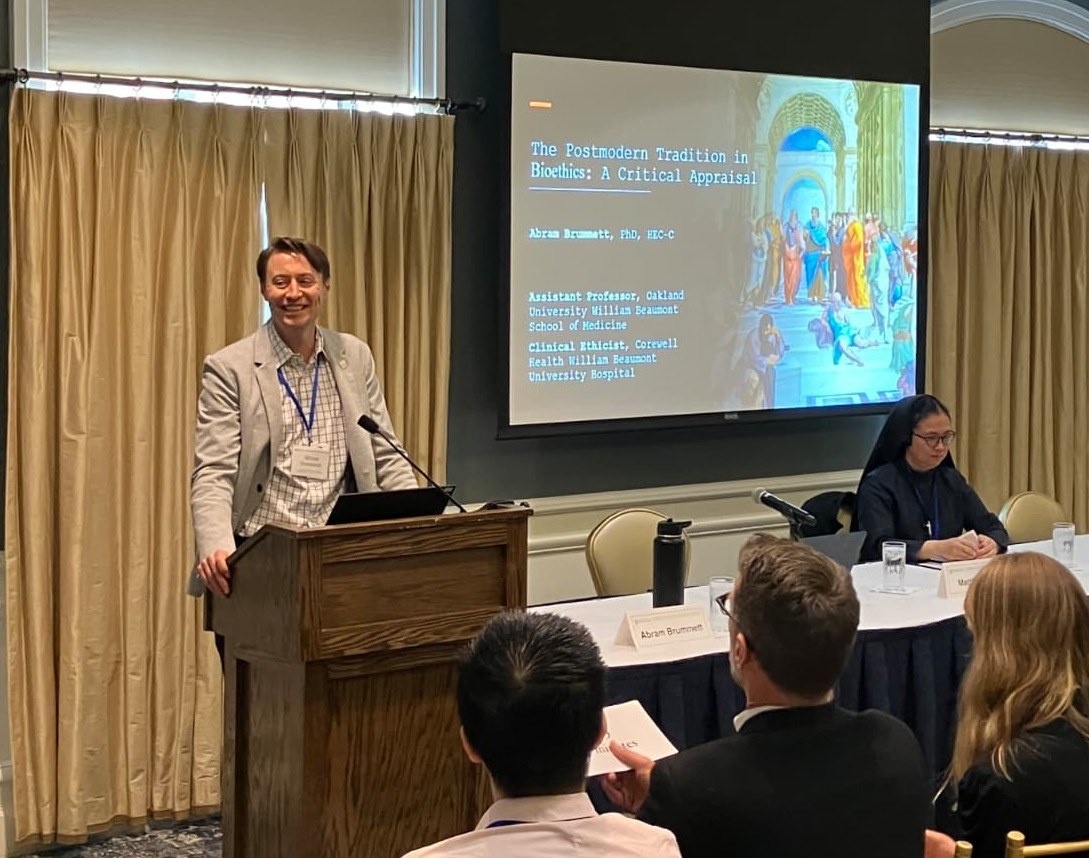
The Postmodern Tradition in Bioethics: A Critical Appraisal
Beyond the book
A living intellectual project
The book invites others to engage critically and constructively with the bioethics tradition and the philosophical account we have developed. We hope to foster this ongoing dialogue through forthcoming special issues in bioethics journals, workshops, conference presentations, and seminars. Our aim is to contribute to the continued development of the tradition through collective moral inquiry.
The book builds upon a series of publications exploring the nature of ethics expertise, the philosophical foundations of secular bioethics, and the possibility of developing justified moral guidance in a pluralistic society.